
Ocean Flavors, Reimagined
Our oceans face significant challenges from overfishing, pollution, and climate change. These issues impact marine ecosystems and those who enjoy seafood. Fortunately, we can still enjoy ocean flavors without worsening these problems.
Innovation in food tech now makes it possible to create delicious, sustainable seafood alternatives from plant-based ingredients. This approach reimagines ocean flavors without sacrificing taste or texture. Seafood demand is increasing, projected to reach over 20 million tonnes by 2025 (FAO), but traditional fishing methods cause significant damage.
These alternatives appeal to anyone wanting to reduce their environmental impact or explore new culinary experiences, not just vegetarians or vegans. It's a shift toward a more responsible and delicious way to enjoy ocean flavors.
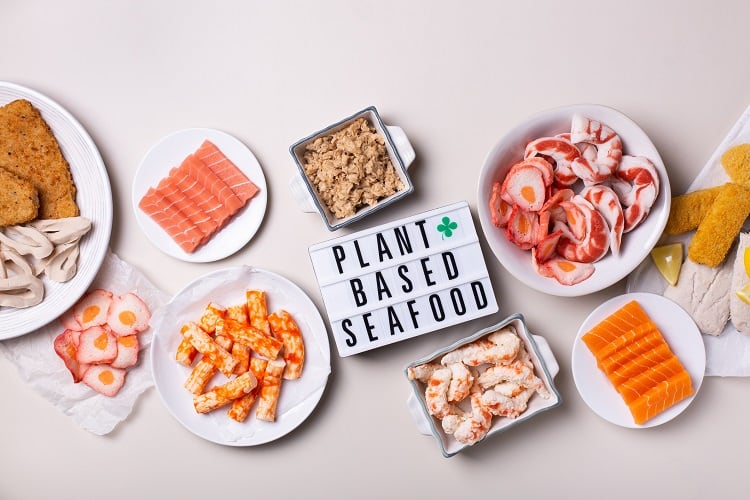
Algae: The Ocean’s Hidden Potential
Algae is an emerging star ingredient in plant-based seafood. This includes macroalgae, like sushi seaweed, and microalgae, tiny nutrient-rich organisms. Both offer potential for seafood alternatives.
Microalgae are nutritional powerhouses, high in omega-3 fatty acids, protein, and essential vitamins. They provide real health benefits. Algae can mimic the texture and flavor of fish. Certain species can be processed to create flaky "tuna" or salmon-like textures, offering a similar experience to real fish.
Companies like Oceanly use algae to develop seafood alternatives, focusing on taste and minimal environmental impact. Scaling up production is a challenge, but growing investment in algae farming suggests a positive future for this ingredient.
Algae's versatility extends beyond texture. It naturally contains compounds that contribute to a distinct "ocean" flavor, reducing the need for artificial additives. This resource has been largely untapped until recently.
Mushrooms: Beyond the Forest Floor
While algae connects to the ocean through its aquatic nature, mushrooms offer a different approach to seafood substitutes. Oyster and lion’s mane mushrooms are gaining attention for their potential. Their fibrous texture, when prepared correctly, can resemble the flesh of scallops, lobster, or crab.
Chefs and food scientists experiment with cooking techniques like shredding, layering, and marinating to create textures that mimic seafood. Mushrooms also possess a naturally savory flavor profile due to high glutamate levels, contributing to "umami" taste.
Quorn, a meat alternative company, explores mushrooms in their plant-based seafood. They use mycoprotein technology to create flavorful and sustainable products, demonstrating fungi's versatility and potential in the seafood industry.
Flavor Engineering: Replicating the Ocean
Creating a convincing seafood alternative requires nailing the flavor, which is where flavor engineering comes in. Companies incorporate other ingredients beyond algae or mushrooms to recreate the complex taste of the ocean.
Kelp powder and dulse flakes, derived from seaweed, provide a briny, umami-rich base. These are often combined with other flavor enhancers, like plant-based fish sauce or fermented ingredients, to build depth and complexity. Fermentation is a powerful tool for developing seafood-like flavors, mimicking natural breakdown processes in aging fish.
Replicating the exact taste of the ocean remains a challenge, as the subtle nuances of different fish species are difficult to capture perfectly. However, significant progress has been made, and many plant-based seafood alternatives are now close to the real thing. Food scientists show ingenuity and dedication in creating sustainable, delicious options.
The Plant Based Seafood Co. and Beyond
The Plant Based Seafood Co. offers a diverse range of plant-based products, including crabless cakes, shrimp, salmon, and whitefish. Their commitment to flavor and sustainability includes donating 1% of profits to coral reef restoration.
Their crabless cakes have garnered attention for realistic texture and flavor, capturing the sweetness of crab without harming marine life. The Plant Based Seafood Co. is not alone; companies like Good Catch Foods also offer plant-based tuna and fish sticks.
Future developments may include more realistic textures, sophisticated flavor profiles, and increased accessibility and affordability. The potential for growth and innovation in this sector is enormous.
Sustainability: A Wave of Change
Plant-based seafood offers substantial environmental benefits. Traditional fishing practices contribute to overfishing, depleting fish populations and disrupting marine ecosystems. Bycatch, the unintentional capture of non-target species, also causes the deaths of countless marine animals.
Aquaculture has drawbacks, including pollution from fish waste and disease spread. Algae and mushroom farming are more sustainable practices, requiring less land and water and not contributing to wild fish stock depletion.
According to a 2023 Monterey Bay Aquarium Seafood Watch report, over 60% of commonly consumed seafood species are unsustainable. Plant-based alternatives offer a way to enjoy ocean flavors without contributing to this crisis. While plant-based production has an environmental footprint, it is a step in the right direction.
Traditional Seafood vs. Plant-Based Seafood: A Comparative Overview (2026)
| Environmental Impact | Cost | Nutritional Value | Flavor/Texture | Availability |
|---|---|---|---|---|
| Generally Higher Impact | Variable, often Lower for wild-caught, Higher for farmed | Naturally rich in Omega-3s, Vitamin D, and Protein | Complex, nuanced flavors dependent on species; texture varies widely. | Widely available globally, established supply chains. |
| Lower Impact (potentially) | Currently often Higher, but decreasing with scale | Can be fortified with Omega-3s and Vitamin D, Protein content comparable to seafood | Flavor profiles aim to mimic seafood, texture often a trade-off; improvements ongoing. | Growing availability, primarily in developed markets and specialized retailers. |
| Wild-Caught: Significant bycatch & habitat disruption. Aquaculture: Pollution & feed sourcing concerns | Production costs for plant-based options are decreasing, but remain a factor | Nutrient profiles can be engineered, but bioavailability of some nutrients may differ. | Plant-based options often rely on algae or mushroom bases, resulting in unique flavor profiles. | Traditional seafood has a long-established distribution network; plant-based is expanding. |
| Overfishing is a major concern for many species; impacts marine ecosystems | Price fluctuates based on species, season, and location. | Provides essential micronutrients like iodine and selenium. | Offers a wide range of textures, from flaky white fish to firm shellfish. | Highly accessible in coastal regions; transport costs can affect inland pricing. |
| Plant-based relies on land and freshwater resources, but generally less impactful on marine ecosystems. | Economies of scale are needed to reduce costs and compete with established seafood. | Formulations can be tailored to address specific nutritional needs, such as lower mercury content. | Achieving authentic seafood flavor and texture remains a key challenge; ongoing innovation is focused on this. | Distribution is expanding, but plant-based alternatives are not yet as ubiquitous as traditional seafood. |
Qualitative comparison based on the article research brief. Confirm current product details in the official docs before making implementation choices.
What 2026 Might Hold
The plant-based seafood market is poised for continued growth. Advancements in flavor technology will likely lead to more realistic and nuanced seafood alternatives. Texture improvements are also expected, with companies refining techniques to create products that mimic fish flakiness.
Cost reduction is another key area of focus. Currently, plant-based seafood alternatives are often more expensive than their conventional counterparts. As production scales up and efficiencies are gained, prices are likely to come down, making these options more accessible to a wider range of consumers. There's a lot of investment happening in this area, so that trend is likely to continue.
The possibility of 3D-printed seafood is also on the horizon. While still in its early stages, this technology could allow for the creation of highly customized seafood alternatives, tailored to individual nutritional needs and preferences. It’s a fascinating concept, though I’m not sure about its immediate feasibility. Government regulations and consumer demand will also play a crucial role in shaping the future of the industry. Increased awareness of the environmental impact of seafood consumption is likely to drive demand for sustainable alternatives.
Would you be willing to try plant-based seafood alternatives?
Vote below and share how open you are to trying algae- and mushroom-based seafood alternatives.



No comments yet. Be the first to share your thoughts!