
A Seat at the Virtual Table
Virtual reality cooking classes offer an immersive way to learn about food, transporting you to kitchens around the world from your living room.
The Meta Quest 2 and 3 headsets provide accessible, user-friendly VR experiences without needing a powerful PC, making VR cooking more attainable.
VR cooking classes add a new dimension to culinary education, allowing you to experience global flavors and techniques and learn from chefs worldwide without the cost and hassle of travel.
Current VR cooking experiences are evolving rapidly. While not perfect, games and simulations offer a glimpse of future possibilities. Expect significant developments by 2026.
Lost Recipes, Found in VR
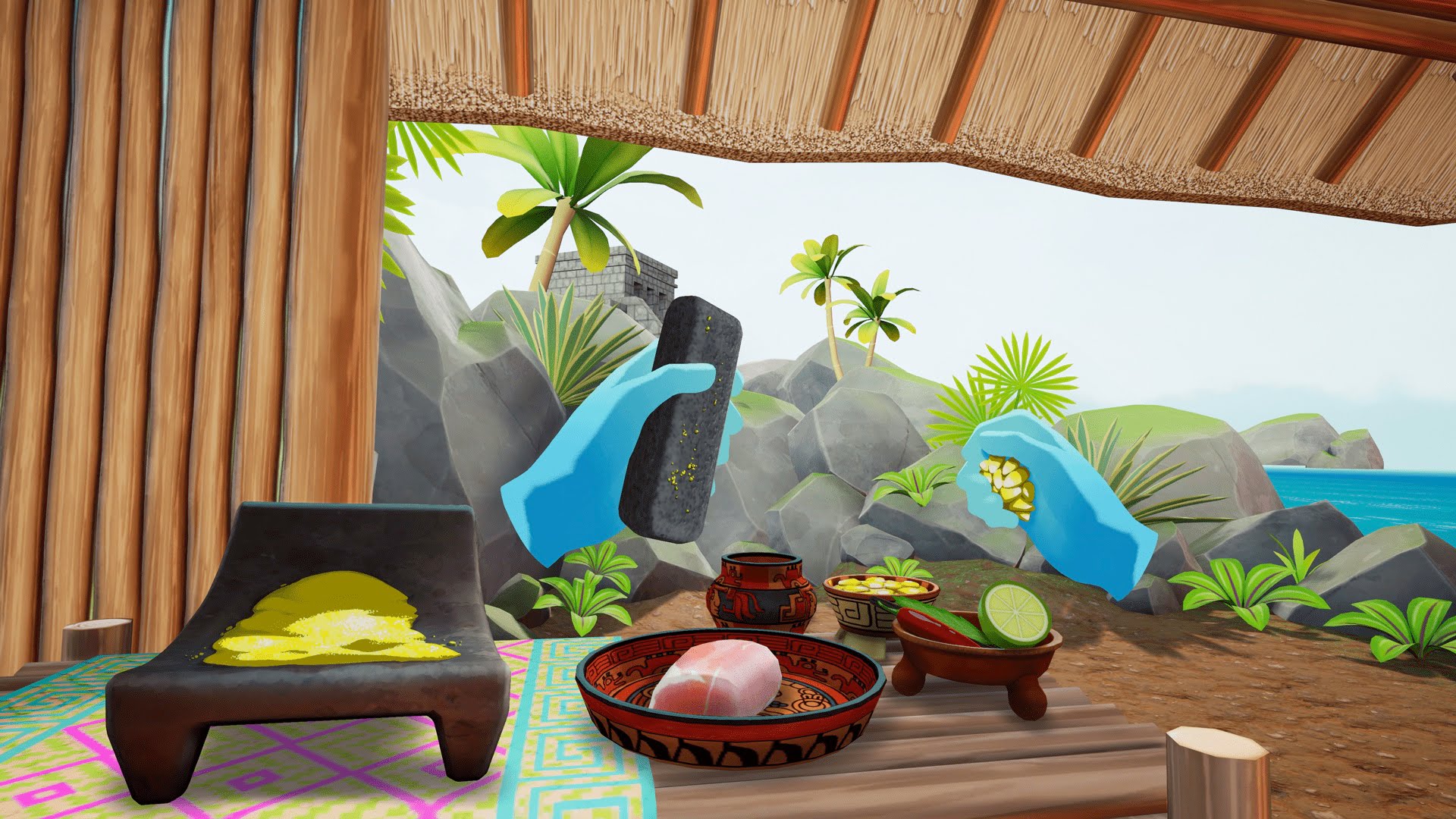
VR cooking offers a unique way to preserve and recreate historical cuisine. Schell Games’ "Lost Recipes" lets players prepare dishes from centuries-old recipes, focusing on culinary history and cultural context.
"Lost Recipes" goes beyond instructions, teaching the 'why' behind food by exploring ingredients, techniques, and the stories of the dishes' creators. This offers a deeper immersion than traditional cookbooks or videos.
Culinary historian and chef Melanie Harke, featured in a YouTube interview with Soul Fox Gaming, highlights how VR allows experiencing historical recipes as intended, offering insights into the past. Virtually visiting different eras and cultures serves as a powerful educational tool.
This historical focus distinguishes VR cooking. It connects users to food's roots and the cultural significance of dishes, merging technology and gastronomy.
Beyond 'Cooking Clash': Gamification and Skill
"Cooking Clash" on Meta Quest offers a fast-paced, competitive VR cooking experience where players prepare dishes under pressure to satisfy virtual customers, with performance tracking.
While "Cooking Clash" may improve speed and coordination, its arcade-style focus on efficiency over flavor and technique makes its ability to teach actual cooking skills questionable.
However, it could serve as a good entry point for people who are intimidated by cooking. The gamified environment makes it less stressful to experiment and learn. The pressure of a virtual kitchen might even help some people overcome their fear of making mistakes, and build confidence in their abilities.
Fudgy’s playthrough on YouTube shows the frantic pace of the game. It’s entertaining to watch, but it’s hard to see how it would prepare someone to, say, perfectly sear a steak or bake a delicate soufflé. It's a fun diversion, but don’t expect to become a master chef overnight.
VR Kitchen Challenge: Are You Ready to Cook the World?
Virtual Reality is poised to revolutionize how we learn to cook! Before you dive into immersive international cuisine classes in 2026, let's test your foundational cooking knowledge. This 'VR Kitchen Challenge' will assess your basic skills – think of it as calibrating your virtual senses. Answer honestly, and we’ll let you know if you’re ready for the heat!
The Sensory Gap: What’s Missing?
The biggest limitation of VR cooking, and VR experiences in general, is the lack of sensory input. Smell and taste are absolutely fundamental to the culinary experience, and currently impossible to fully replicate in a virtual environment. You can see a beautifully plated dish, but you can’t smell the aromas or taste the flavors.
Developers are exploring ways to overcome this limitation. Haptic feedback gloves can simulate the texture of ingredients, and visual cues can suggest flavors. Some are even experimenting with suggestive audio – the sizzle of meat, the crunch of vegetables – to create a more immersive experience.
But these are just approximations. They can enhance the illusion, but they can’t replace the real thing. It’s like watching a movie about food versus actually eating it. There’s a fundamental difference in the level of engagement.
We have to be realistic about what VR can and can’t deliver. It’s a powerful tool for visual and interactive learning, but it can’t fully replicate the multi-sensory experience of cooking. For now, it's a supplement to, not a substitute for, real-world cooking.
Sensory Experience in Real-World vs. Virtual Reality Cooking (2026 Projection)
| Sense | Real-World Experience | Current VR Replication | Future Potential |
|---|---|---|---|
| Sight | Visual assessment of ingredients, color changes during cooking, plating presentation. | Visually accurate representation of ingredients and cooking processes within the VR environment. Games like Cooking Clash demonstrate detailed food models. | Increased photorealism and dynamic lighting to mimic real-world kitchen environments. Potential for augmented reality overlays providing ingredient information. |
| Sound | Sounds of chopping, sizzling, boiling, and kitchen ambiance contribute to the cooking experience. | Basic sound effects representing cooking actions are present in VR cooking games. Spatial audio attempts to create a sense of kitchen presence. | More nuanced and realistic soundscapes, including the subtle sounds of ingredient textures and varying heat levels. Integration with voice control for instructions and feedback. |
| Touch | Feeling the texture of ingredients, the weight of a knife, the heat from a stove. | Currently limited to haptic feedback through controllers, offering rudimentary sensations of interaction. Some systems provide vibration. | Advanced haptic suits and gloves could simulate the texture and temperature of ingredients, and the resistance of cutting or kneading. Precise force feedback for realistic tool use. |
| Smell | A crucial component of flavor perception; aromas signal doneness and influence taste. | Currently absent in most VR cooking experiences. This is a significant limitation. | Development of olfactory VR technology is ongoing, with potential for scent cartridges or localized scent diffusion to simulate aromas. This remains a substantial technological challenge. |
| Taste | The culmination of all senses, directly perceiving the flavor profile of the dish. | Completely absent in current VR cooking experiences. Taste simulation is a long-term research goal. | Direct taste simulation is highly speculative. Future possibilities might involve non-invasive stimulation of taste receptors, but this is beyond current capabilities. Focus remains on enhancing the perception of flavor through the other senses. |
| Spatial Awareness | Understanding the kitchen layout, ingredient placement, and distances. | VR allows for a customizable kitchen environment, but interaction can feel constrained. | More intuitive and natural interaction with the virtual kitchen, potentially utilizing room-scale VR and advanced tracking for precise movements. |
Illustrative comparison based on the article research brief. Verify current pricing, limits, and product details in the official docs before relying on it.
Instructors and Immersive Classrooms
The structure of VR cooking classes varies. Some are pre-recorded experiences, like "Lost Recipes", where you follow a set of instructions at your own pace. Others are live, instructor-led sessions, where you can interact with the chef and other students in real-time.
The live classes are particularly promising. They offer the opportunity to ask questions, receive personalized feedback, and feel like you’re actually part of a classroom. The level of interaction depends on the platform and the instructor, but it’s generally more engaging than a pre-recorded video.
I’m curious to see if we’ll see celebrity chefs hosting VR classes. Imagine learning pasta making from an Italian nonna in her virtual kitchen, or mastering sushi from a renowned Japanese chef. That would be a truly unique and valuable experience. The technology is there, it’s just a matter of whether the chefs are willing to embrace it.
Currently, TikTok videos showcase the ability to cook with friends in VR, using games like 'Cooking Class' where you can compete to see who can prepare American, Italian, and Japanese dishes the fastest. This social element is important. Cooking is often a shared experience, and VR can help recreate that sense of community.
The Cost of Virtual Cuisine
Let’s talk about the financial investment. A Meta Quest 2 currently costs around $200 - $300, while the newer Meta Quest 3 is in the $500 - $600 range. That’s the biggest upfront cost.
The cost of VR cooking classes themselves varies. Some experiences are included with a subscription to a VR platform, while others are purchased individually. I haven’t seen a lot of detailed pricing information yet, but I expect most classes will fall in the $20 - $50 range per session.
So, a realistic estimate of the total cost of entry would be around $250 - $650, depending on the headset you choose and the number of classes you take. That’s comparable to the cost of a few traditional cooking classes, but it’s an ongoing expense if you plan to continue learning.
It’s important to remember that the cost of VR cooking isn’t just the hardware and the classes. You’ll also need a comfortable space to move around in, and potentially some accessories like haptic feedback gloves (which can add another $100 - $200 to the cost).
2026 and Beyond: The Future of Flavor
Looking ahead to 2026 and beyond, I think we’ll see significant advancements in VR cooking technology. More sophisticated haptic feedback will allow us to feel the texture of ingredients more realistically, and better integration with smart kitchen appliances will automate some of the more tedious tasks.
AI-powered recipe generation is another exciting possibility. Imagine being able to tell the VR system what ingredients you have on hand, and it will create a customized recipe for you. Or being able to ask the system to adjust a recipe based on your dietary restrictions or preferences.
The biggest challenge will be overcoming the sensory gap. While it’s unlikely we’ll be able to fully replicate smell and taste in VR anytime soon, developers are exploring innovative solutions, such as using scent diffusers or electrical stimulation to trigger sensory responses.
Will VR cooking become a mainstream hobby? I’m optimistic. As the technology continues to improve and become more accessible, I believe it will attract a wider audience. It’s a fun, engaging, and educational way to learn about food, and it has the potential to revolutionize the way we cook.
Would you be interested in taking a VR cooking class?
Vote below!
Where to Find Your First VR Meal
If you’re interested in trying VR cooking for yourself, the Meta Quest store is a good place to start. You can find "Cooking Clash’ and other VR cooking games there. Schell Games’ ‘Lost Recipes" is available on various VR platforms, including SteamVR and the Meta Quest store.
YouTube is also a great resource for finding videos and reviews of VR cooking experiences. Search for "VR cooking’ or ‘Lost Recipes" to see what others are saying. TikTok also has a growing community of VR cooking enthusiasts, sharing tips and tricks.
Keep an eye out for upcoming releases. Several developers are working on new VR cooking experiences, and I expect to see some exciting new titles in the coming months. The VR landscape is constantly evolving, so it’s worth staying informed.
Ultimately, the best way to find out if VR cooking is right for you is to try it for yourself. It’s a unique and immersive experience that offers a new perspective on culinary education. And who knows, you might just discover your inner chef.
VR Cooking Experiences
- Cooking Clash - A fast-paced, competitive cooking game where players race against the clock and each other to prepare dishes. Focuses on speed and accuracy in a kitchen environment.
- Lost Recipes - An exploration-based cooking adventure where players uncover ancient culinary traditions and prepare historical recipes. Emphasis on ingredient sourcing and cultural context.
- Virtual Kitchen - Offers a range of cooking simulations, from basic knife skills to complex recipes. Provides a more realistic and educational approach to virtual cooking.
- Clash of Chefs VR - A multiplayer cooking competition where players collaborate or compete to create dishes judged on presentation and taste (simulated).
- Chef Life: A Restaurant Simulator - While not strictly a 'class', this simulator allows users to manage a restaurant and prepare a wide variety of dishes, offering a comprehensive culinary experience.
- Rhythm Kitchen - A unique rhythm-based cooking game where players must chop, mix, and cook to the beat of the music. Adds a musical element to the cooking process.
- Project Nourish - A VR experience focused on mindful cooking and healthy eating. Guides players through preparing nutritious meals with an emphasis on well-being.

No comments yet. Be the first to share your thoughts!